Monday, June 16, 2014
How To Train Your Dragon 2
The first movie was cool, and so is the sequel. How To Train Your Dragon 2 has the same humor, action, and wittiness. Hiccup is back and he's older. He's created cooler gadgets, and more adventures await as he goes exploring the world.
High energy pulls the viewer through the whole show, with no boring parts at all. Even adult viewers are easily pulled in, while at the same time without the annoying use of sexual innuendos or colorful metaphors that some writers mistakenly think are above children's intelligence/experience levels.
What makes this movie so successful is the strong story line. Even though it sometimes feels like it's setting up for the third movie yet to come, it all holds together and prompts strong emotional responses across the spectrum.
I recommend watching this in the theater because of the colorful imagery. Sometimes I forgot I was watching a cartoon. I watched it in 2D, but my kids went back to watch it in 3D. They report mixed reviews. Two thought it was worth the extra bucks, and the third wasn't so sure. Either way, you get the story, and sometimes that's just most of the experience.


Wednesday, June 11, 2014
Edge of Tomorrow: It's Not Dead Yet
Why is everyone so ready to write off the movie Edge of Tomorrow as this summer's first big-budget flop? I would love to see the numbers turn around and make these experts eat their words.
Why did the movie do so terribly in the US (so far)? I can tell you why ...
#1) The title really sucks. The movie is much more exciting than its title.
#2) The poster looks boring, too.
#3) People are hesitant to see another Oblivion (though, I liked that movie--it wasn't too bad).
#4) Tom Cruise and his wacky religion. Yeah, I've seen people online complaining about that.
But something else is happening. People are talking about this movie. It's much better than Oblivion. Tom Cruise actually did a good job in this role and is not too annoying. (Some will even enjoy seeing him cut down in the beginning of the film.) The action is awesome, and the plot is interesting.
I wouldn't be surprised if this movie enjoys a steady cash flow over the next few weeks. Let's look at some numbers.
Edge of Tomorrow had a production budget of $178M. Domestically, it earned only $29M over the weekend. As of June 10, its cumulative is now up to $35M. That sounds pretty paltry, doesn't it?
As usual for Tom Cruise, the foreign market is eating up this movie. It's already eared $111M in the foreign market, bringing the total to $146M so far. It will definitely end up covering the production costs. It still has a long ways to go to meet other costs, though.
I don't think it's over, yet. I'm hoping that those who've seen it already will tell their friends, and we'll see another wave of viewers in the next couple of weeks. Don't let the experts tell you NOT to see this movie because it's DOA. Rather, go and enjoy this before it leaves theaters.
Why did the movie do so terribly in the US (so far)? I can tell you why ...
#1) The title really sucks. The movie is much more exciting than its title.
#2) The poster looks boring, too.
#3) People are hesitant to see another Oblivion (though, I liked that movie--it wasn't too bad).
#4) Tom Cruise and his wacky religion. Yeah, I've seen people online complaining about that.
But something else is happening. People are talking about this movie. It's much better than Oblivion. Tom Cruise actually did a good job in this role and is not too annoying. (Some will even enjoy seeing him cut down in the beginning of the film.) The action is awesome, and the plot is interesting.
I wouldn't be surprised if this movie enjoys a steady cash flow over the next few weeks. Let's look at some numbers.
Edge of Tomorrow had a production budget of $178M. Domestically, it earned only $29M over the weekend. As of June 10, its cumulative is now up to $35M. That sounds pretty paltry, doesn't it?
As usual for Tom Cruise, the foreign market is eating up this movie. It's already eared $111M in the foreign market, bringing the total to $146M so far. It will definitely end up covering the production costs. It still has a long ways to go to meet other costs, though.
I don't think it's over, yet. I'm hoping that those who've seen it already will tell their friends, and we'll see another wave of viewers in the next couple of weeks. Don't let the experts tell you NOT to see this movie because it's DOA. Rather, go and enjoy this before it leaves theaters.
Thursday, June 5, 2014
Edge of Tomorrow: The Next Blockbuster?
Could it be that Tom Cruise is finally in a sci-fi movie that will be well-received? I really hope so, because I really liked this movie.
First I should say in full disclosure that I'm a fan of Tom Cruise sci-fi movies, even when they're not popular. Often I think his movies get a bad rap because of his affiliation with Scientology and his whole "I'm better than you" attitude. But I am one who is able to set that aside and enjoy his acting.
The first few minutes seemed a little cheesy and reminded me of Battle: Los Angeles (which I liked and no one else did), and I feared I was watching a dud, but then I was hooked when the real story began. The action continued forward, and there was never a dull moment.
Tom Cruise plays Major Cage, a total jerkwad and a coward. It's fun to watch what happens to Cage as he earns his just rewards. He is thrown into the thick of battle, dies, and ... Groundhog Day! He wakes up one day earlier. He relives the disastrous battle and learns that he can do different things to change the outcome.
Yes, a large part of the movie is practically isomorphic to Groundhog Day. At first there's the concern that we, the audience, will be forced to watch the same scenes over and over again. (Well, we do get to see Emily Blunt do Upward Dog at least six times.) But just when you think it might start to get boring, the slow parts get skipped, and ... well ... I'll just say I think they did a very good job in editing and story telling -- keeping it interesting while not confusing the audience. I only got confused once (when Cage took some random trip among civilians one time ... how exactly did he get there?).
The movie isn't perfect. There are several glaring plot holes, which I'm sure many will say, "I hated this movie because ... <blah>." Unfortunately, I can't describe any of these holes without giving away what happens. The action and interesting characters more than make up for the glaring holes.
My advice ... go see this movie. Don't see it in 3-D, though. They didn't pay the extra amount to shoot the movie in 3-D (instead opting to go the cheaper 3-D conversion route), so I didn't pay the extra $3. I don't feel like I missed a thing.
And finally, one small spoiler. If you watch it this Friday (June 6), notice where the big battle takes place. My verdict: it's a fun movie to watch while simultaneously celebrating D-Day.
Sunday, June 1, 2014
The 80-20 Principle: The Secret to Success?
If you've ever taken a class on job efficiency, I'm sure you've heard of the 80-20 principle. Basically, it says that 80% of the results comes from 20% of the effort. What this means is that you can often spend 80% of your time and effort trying to achieve the final 20% of your results. This is often called the Law of Diminishing Returns.
Often, 80% of the results is good enough if you have a million things to do. If you spend only 20% of the time on the project, then you can produce results quickly, impress your superiors, and move on to the next project. On the other hand, if you want perfection when it's not really required, you could spend hours just getting that annoying font perfect, or the calculation of a non-consequential number perfect. In other words, you could be wasting time when other projects are awaiting your attention.
Makes sense? It's a very good principle to follow in business. I've found it helps me greatly at work. When I see others ignore it, they tend to work more inefficiently and end up working long hours.
However, there's another side to this principle that I'd like to explore. As I come near an end to my five-year midlife crises, I've come to a realization about myself. I am naturally very good at several different things.
For example, as I was finishing my Masters in Music, I needed 3 more credit hours. Just for fun, I took Physics 2 (skipping Physics 1). Without hardly any effort at all, I was able to pass at the top of the whole class, even beating that one Chinese dude that wanted top. Heh heh heh.
I am also good at sight-reading. Put something in front of me, and I'll pound it out on the piano.
My whole life I've been living the 80-20 Principle without realizing it. Everything was just so easy that I felt like I didn't need to put forward the extra effort.
That is until I hit 40 and realized: "Why doesn't anyone read my stories?" and "Why won't people listen to my music?" The answer is very simple. I had never really worked hard in life to achieve the 100% perfection. I had been getting by on 80% in many aspects of my life, but get this ...
Whatever you do, there is somebody else in this world who can do it better than you. If you want to get published, you're going to have to be in that top 1% of all the writers of the world. 80% just doesn't cut it. Sure, your stories may be fun to read, and well written and all that, but are they 80%? Or are they 99%? The magazines will be publishing the 99% stories, while the 80% stories will be long forgotten.
Here's another example. Chopin wrote the Etude opus 10, number 1, which is so difficult, even Horowitz avoided playing it in public. (If you can find a recording, I'd be interested to hear it, but I can't seem to find one.)
The Etude is actually very easy to memorize. It's basically all chords with a moving bass line and the melody interspersed almost randomly in the right hand. So, I worked it up, giving it my usual 80% effort, and I posted it on YouTube thinking I was hot stuff. Here's that recording (listen for about the first minute or so):
But then, I was brought down. One You-Tuber (who has since deleted his comments) pointed out some technical difficulties that was ruining my performance. He basically opened my eyes that this was a terrible performance. Sure, my performance may be cool and impressive to some who don't play the piano, but any experienced piano player would cringe and stop listening after the first 15 seconds.
With this small amount of effort, it's no surprise that I'm not currently playing in Carnegie Hall.
So, I worked up the Etude again. After spending a whole year on technique and smoothing out issues, I got it to this 95% performance (again, you only need to listen for about a minute) ...
It's not perfect, but this second performance is much more bearable. Also, check out the difference in times. 2:17 vs. 3:19? Yes, I got it to be faster! And yes, it's impressive. I bet most of you can't hear why it's not going to get me into Carnegie Hall. I still need to finish up the last 5% and get the piece closer to 100%.
Here is a professional recording (listen to the first minute or so)...
Ashkenazy plays this very well. He's at least 99% if not at 99.5%. He's mastered the dynamics. He plays it slightly faster than I do. He has fewer errors. He's found a way to add feeling into the piece.
Now for the coup-de-grace. Go back to my second recording and listen again to the first minute or so. Now, can you hear the difference? Yes. If I ever hope to get noticed, I need to get to that 99% level.
It's the same with writing fiction. Have you ever read a book that was so good that you almost feel like "I'm not worthy"? If so, you have experienced the 99%, and that's exactly where you need to be if you want to get published.
So, what does this all mean? Basically, you must decide what you want to excel in. You can put forward 20% of the effort in most aspects of your life and be happy with the 80% results. But where it really matters, you should put in the other 80% effort (what Bradbury called Perspersistence) and do whatever it takes to bring your work much closer to 100%.
It's not too late for me. I want this. I want my fiction to be published. I want people to perform my compositions. I want to do something good in this world and leave my contributions. I know exactly what I need to do next.
Who's with me?
With this small amount of effort, it's no surprise that I'm not currently playing in Carnegie Hall.
So, I worked up the Etude again. After spending a whole year on technique and smoothing out issues, I got it to this 95% performance (again, you only need to listen for about a minute) ...
It's not perfect, but this second performance is much more bearable. Also, check out the difference in times. 2:17 vs. 3:19? Yes, I got it to be faster! And yes, it's impressive. I bet most of you can't hear why it's not going to get me into Carnegie Hall. I still need to finish up the last 5% and get the piece closer to 100%.
Here is a professional recording (listen to the first minute or so)...
Ashkenazy plays this very well. He's at least 99% if not at 99.5%. He's mastered the dynamics. He plays it slightly faster than I do. He has fewer errors. He's found a way to add feeling into the piece.
Now for the coup-de-grace. Go back to my second recording and listen again to the first minute or so. Now, can you hear the difference? Yes. If I ever hope to get noticed, I need to get to that 99% level.
It's the same with writing fiction. Have you ever read a book that was so good that you almost feel like "I'm not worthy"? If so, you have experienced the 99%, and that's exactly where you need to be if you want to get published.
So, what does this all mean? Basically, you must decide what you want to excel in. You can put forward 20% of the effort in most aspects of your life and be happy with the 80% results. But where it really matters, you should put in the other 80% effort (what Bradbury called Perspersistence) and do whatever it takes to bring your work much closer to 100%.
It's not too late for me. I want this. I want my fiction to be published. I want people to perform my compositions. I want to do something good in this world and leave my contributions. I know exactly what I need to do next.
Who's with me?
Thursday, May 22, 2014
AdSense: The Saga Continues
Here's another update on how well AdSense is working for me. (You can read the first three parts here: 1, 2, 3.)
After three months of AdSense being active, I'm happy to report that I'm still under $2.00 total. Yeah! I'm up to four clicks. Also, after the first month, I started seeing occasional 1 cent revenues, which I believe is just from people seeing the ads, but not clicking on them.
So far, it doesn't seem worth it. It's almost as if I'm providing nearly free advertising. I'll keep it going for a while, though. I need to at least get my first $10. Then I may request my payment and turn off the service.
It's been a fun experiment, though.
Today I'm expanding the experiment to my YouTube videos. I turned on monetization over there. Though, I was a little disappointed at the seemingly lack of clear explanations as to how it works.
Also, I don't want to monetize very many of my videos ... just the more popular ones, and not ones where I'm borrowing any free material. In fact, those specific videos are not eligible for monetization.
So, I turned on monetization, and you'll never guess what. YouTube/Google turned on Monetization on ALL my videos. And there's no mass edit to turn off the ones I want to turn off. I have to go into every single video and turn them off one by one. Plus, YouTube/Google may now investigate ALL my videos and may punish me for asking to monetize ineligible videos. But ...
I NEVER AGREED TO TURN ON ALL MY VIDEOS. I ONLY UNDERSTOOD THAT I WOULD HAVE THE OPTION TO MONETIZE ... NOT THAT YOUTUBE/GOOGLE WOULD TURN ON ALL THE VIDEOS FOR MY "CONVENIENCE"!!
Sorry, I'm just a little angry. Here I go ... turning off monetizations one by one, saying, "Stupid Google" with each click. It's actually kind of fun.
After three months of AdSense being active, I'm happy to report that I'm still under $2.00 total. Yeah! I'm up to four clicks. Also, after the first month, I started seeing occasional 1 cent revenues, which I believe is just from people seeing the ads, but not clicking on them.
So far, it doesn't seem worth it. It's almost as if I'm providing nearly free advertising. I'll keep it going for a while, though. I need to at least get my first $10. Then I may request my payment and turn off the service.
It's been a fun experiment, though.
Today I'm expanding the experiment to my YouTube videos. I turned on monetization over there. Though, I was a little disappointed at the seemingly lack of clear explanations as to how it works.
Also, I don't want to monetize very many of my videos ... just the more popular ones, and not ones where I'm borrowing any free material. In fact, those specific videos are not eligible for monetization.
So, I turned on monetization, and you'll never guess what. YouTube/Google turned on Monetization on ALL my videos. And there's no mass edit to turn off the ones I want to turn off. I have to go into every single video and turn them off one by one. Plus, YouTube/Google may now investigate ALL my videos and may punish me for asking to monetize ineligible videos. But ...
I NEVER AGREED TO TURN ON ALL MY VIDEOS. I ONLY UNDERSTOOD THAT I WOULD HAVE THE OPTION TO MONETIZE ... NOT THAT YOUTUBE/GOOGLE WOULD TURN ON ALL THE VIDEOS FOR MY "CONVENIENCE"!!
Sorry, I'm just a little angry. Here I go ... turning off monetizations one by one, saying, "Stupid Google" with each click. It's actually kind of fun.
Monday, April 28, 2014
When Good Guys Go Bad
I'm sure you've seen it a hundred times in TV, movies, and in comics. This guy is totally awesome, nice, and handsome. But then halfway through the story, the audience learns that he's really a villain and/or a jerk. Sometimes this is done well, and the character retains his consistency, but most of the time, it comes with an unnatural and unexplained change in the character's persona.
Beware ... spoilers up ahead ...
I bet most of you have already seen Frozen. If so, one person should immediately come to mind: Hans, the prince with twelve older brothers. At first we see him like this ...
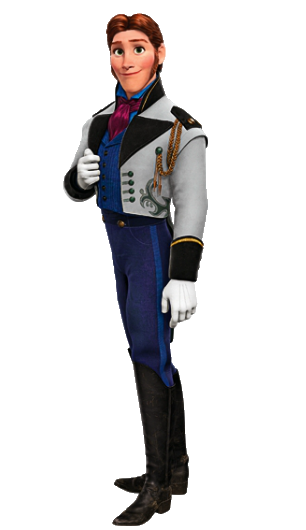
Nice guy, huh? (Though many have pointed out ... why isn't he included in most of the Frozen merchandise? Could it be ...?) Yeah, he turns out to be evil. Up until the big reveal to the audience, he looks all good-natured and full of concern and responsibility. And then as soon as the reveal is made, it's as if a light switch is flipped. Then for the rest of the movie, he looks like this ...
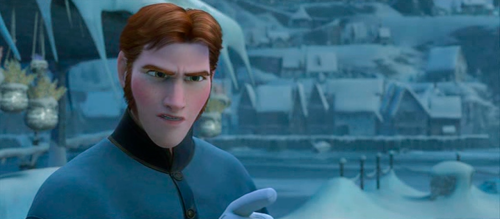
Even when he's trying to look nice to the others, we can still see it in his eyes. Why didn't we see it before?
Simple answer ... because he was drawn to be look nice up until the reveal. It was a direct attempt to fool the audience into being taken in by him. Watch Frozen again, and see if you can see the evil in his eyes before the big reveal. I've tried, and it's just not there.
Can you think of other instances? How about Nina Myers from 24. I remember how "good" she looked until the writers decided to make her bad. Then she looked "evil" all the way.
If well done, the character will look the same before and after, and only the audience's perception changes. I would use Senator Palpatine from Star Wars as a well-done example, if only it weren't really due to bad acting all around. Another small example done well might be Harrison Ford in Ender's Game, who's the same throughout even though we come to learn how much of a jerk he really was.
What examples can you think of ... well-done or poorly done?
Beware ... spoilers up ahead ...
I bet most of you have already seen Frozen. If so, one person should immediately come to mind: Hans, the prince with twelve older brothers. At first we see him like this ...
Simple answer ... because he was drawn to be look nice up until the reveal. It was a direct attempt to fool the audience into being taken in by him. Watch Frozen again, and see if you can see the evil in his eyes before the big reveal. I've tried, and it's just not there.
Can you think of other instances? How about Nina Myers from 24. I remember how "good" she looked until the writers decided to make her bad. Then she looked "evil" all the way.
If well done, the character will look the same before and after, and only the audience's perception changes. I would use Senator Palpatine from Star Wars as a well-done example, if only it weren't really due to bad acting all around. Another small example done well might be Harrison Ford in Ender's Game, who's the same throughout even though we come to learn how much of a jerk he really was.
What examples can you think of ... well-done or poorly done?
Sunday, April 6, 2014
Firefox and Intolerance
I must be getting all political here! Last week, I explained why I removed Candy Crush (because of their greedy attempts to patent the names "Candy" and "Saga" in order to crush the competition). This week, (and this is ironic), I will be removing Firefox because of Mozilla's show of intolerance in the face of the latest witch hunt.
Before I continue, a quick little bit about myself: I am a conservative Christian who happens to hold the political view that gay marriage should be allowed. That is, even though I believe homosexuality is a sin, I don't think my views should stand in the way of the happiness of those who believe differently than I do. Let them be happy. Don't judge them. Be friends with them. Support them. That's what tolerance is all about.
I also believe that those who disagree with gay marriage should be allowed to disagree, and even fight the current trend. That's what being American is all about -- free speech -- standing up for what you believe in. Does that make these disagree-ers evil and intolerant? I suppose it depends on how they carry out their protests, but who am I to judge?
My fear is that one day very soon, as gay marriage is becoming legal in all 50 states, the tables will turn, and the gay community will unleash a wave of intolerance against those who fought against gay marriage. It will be a deliverance of "much earned" retaliatory comeuppance. If you don't get with the program, you'll be boycotted, or fired, or blacklisted, or ostracized.
If any of this sounds familiar yet, then you're starting to catch on to the witch hunt that's currently picking up speed. This wave of retaliatory comeuppance is nothing more than another manifestation of McCarthyism. Most of you reading today probably weren't alive when the hearings went down, but many good people were publicly humiliated, blacklisted, and exiled. The actor Charlie Chaplin was even forced to live away from the good old USA for 20 years even though he really wasn't a communist. He only looked like one because of his political attempts to bridge friendship between the US and Russia during World War II. When mob mentality settled in, the witch hunts proceeded. Those labeled as "communist" were prosecuted. Logic went out the window.
What was it Charlie Chaplin said when he learned of the possibility of returning to America?
Back to the present, let's talk about Brendan Eich -- Silicon Valley superstar -- inventor of JavaScript and a whole bunch of behind-the-scene stuff you and I use every day. Six years ago, this man donated $1,000 dollars to Proposition 8. Therefore, he's a "homophobe." It doesn't matter that Brendan has a long history of supporting pro-gay policies at work. Neither does it matter that he emotionally apologized for upsetting so many people a few days ago. It only matters that his name shows up on the ultimate list of homophobes ... those who donated money to Prop 8, and there's no room for repentance.
A couple of weeks ago, Brendan was named CEO of Mozilla. Almost immediately, a few pro-gay groups protested. The prominent dating site OkCupid called for a boycott of Firefox ... a misdirected boycott (in my opinion), as the company Mozilla has no anti-gay policies, and neither was it sending any money toward anti-gay causes, and neither had Brendan had any altercations/issues working with gay people. In fact, Board member Mitchell Baker said of him, "I never saw any kind of behavior or attitude from him that was not in line with Mozilla's values of inclusiveness."
So why did OkCupid call for a boycott? The only reason (as confirmed by their recent statements in reaction to the resignation) was to bring Brendan down. OkCupid gave this contradictory statement on their website: "OkCupid is for creating love. Those who seek to deny love and instead enforce misery, shame, and frustration are our enemies, and we wish them nothing but failure."
It's funny how "creating love" and "enemies" could appear so close together. This kind of contradiction is a normal symptom of a witch hunt ... mob mentality with the lack of ability to step back and analyze the "logic" being presented. In this whole incident, OkCupid wasn't "creating love," but rather demonstrating intolerance (of the retaliatory comeuppance variety). How ironic!
It's all too easy to look back in history at the McCarthy hearings and say, "I would never do that." But at the time, it was all too easy to be caught up in the Red Scare. OkCupid, here, demonstrates how easy it is today to get caught up in the retaliatory comeuppance wave that's building. So, I challenge you. If you can say, "I would never do that" referring to the McCarthy hearings, then now's your chance to reconsider your position today. Do you want to support this rising wave of retaliatory intolerance? Or will you leave it to your grandchildren to look back at our generation and say, "I would never do that"?
Mozilla has chosen to buckle under this wave. The pressure against Brendan built until he was forced to resign. Instead of giving their support, the Board basically threw Brendan under the bus. Take a look at the official Mozilla statement by the Executive Chairwoman, Mitchell Baker.
It starts off apologizing for not acting quickly enough. (What exactly could they do more quickly? Give more support to their CEO and help the world understand why he was really good for the company and the community despite his personal views? Or does this mean they should have asked the world for permission to hire him as CEO?)
Then there's a blurb about standing up for both equality and freedom of speech, but it's hard to figure out how to stand for both. (It's not really that hard ... allow freedom of speech and treat everyone equally. They just failed to treat Brendan equally.)
Then there's a part on Mozilla's inclusiveness, as they welcome contributions from all different strokes of life (but apparently not from the conservatively religious, as evident from the outcome).
From where I stand, Mozilla chose poorly. Now they face a different kind of boycott ... now several want to remove Firefox from their computers because of the unequal and intolerant treatment of Brendan Eich. Even some prominent pro-gay personas have denounced this whole witch hunt.
I think I'll try out Chrome and Safari for a while as I watch how this all plays out. I realize I risk being labeled a homophobe (despite my actual views on the whole subject), but what can I say? I will stand up against intolerance in all its forms. We shouldn't meet intolerance with more intolerance. Let's stop the witch hunt now, especially considering that six years ago, more than half of Americans were against gay marriage. At this rate, there won't be anyone left.
"An eye for an eye, and a tooth for a tooth. Very good. That way the whole world will be blind and toothless." -- Tevye
Before I continue, a quick little bit about myself: I am a conservative Christian who happens to hold the political view that gay marriage should be allowed. That is, even though I believe homosexuality is a sin, I don't think my views should stand in the way of the happiness of those who believe differently than I do. Let them be happy. Don't judge them. Be friends with them. Support them. That's what tolerance is all about.
I also believe that those who disagree with gay marriage should be allowed to disagree, and even fight the current trend. That's what being American is all about -- free speech -- standing up for what you believe in. Does that make these disagree-ers evil and intolerant? I suppose it depends on how they carry out their protests, but who am I to judge?
My fear is that one day very soon, as gay marriage is becoming legal in all 50 states, the tables will turn, and the gay community will unleash a wave of intolerance against those who fought against gay marriage. It will be a deliverance of "much earned" retaliatory comeuppance. If you don't get with the program, you'll be boycotted, or fired, or blacklisted, or ostracized.
If any of this sounds familiar yet, then you're starting to catch on to the witch hunt that's currently picking up speed. This wave of retaliatory comeuppance is nothing more than another manifestation of McCarthyism. Most of you reading today probably weren't alive when the hearings went down, but many good people were publicly humiliated, blacklisted, and exiled. The actor Charlie Chaplin was even forced to live away from the good old USA for 20 years even though he really wasn't a communist. He only looked like one because of his political attempts to bridge friendship between the US and Russia during World War II. When mob mentality settled in, the witch hunts proceeded. Those labeled as "communist" were prosecuted. Logic went out the window.
What was it Charlie Chaplin said when he learned of the possibility of returning to America?
Whether I re-entered that unhappy country or not was of little consequence to me. I would like to have told them that the sooner I was rid of that hate-beleaguered atmosphere the better, that I was fed up of America's insults and moral pomposity.Today, the new label is "homophobe." If you do anything to earn that moniker, you're toast. Prepare to be burned at the stake. It won't matter if you support gay marriage, or if you befriend gay people, or demonstrate tolerance toward them. It will matter that you associate with certain groups, or if you provide an unfortunate sound bite. In my case, it could well turn up ten years from now that I'm a Mormon, and I may be asked to renounce my religion or lose my job. But wait! I'm good people!
Back to the present, let's talk about Brendan Eich -- Silicon Valley superstar -- inventor of JavaScript and a whole bunch of behind-the-scene stuff you and I use every day. Six years ago, this man donated $1,000 dollars to Proposition 8. Therefore, he's a "homophobe." It doesn't matter that Brendan has a long history of supporting pro-gay policies at work. Neither does it matter that he emotionally apologized for upsetting so many people a few days ago. It only matters that his name shows up on the ultimate list of homophobes ... those who donated money to Prop 8, and there's no room for repentance.
A couple of weeks ago, Brendan was named CEO of Mozilla. Almost immediately, a few pro-gay groups protested. The prominent dating site OkCupid called for a boycott of Firefox ... a misdirected boycott (in my opinion), as the company Mozilla has no anti-gay policies, and neither was it sending any money toward anti-gay causes, and neither had Brendan had any altercations/issues working with gay people. In fact, Board member Mitchell Baker said of him, "I never saw any kind of behavior or attitude from him that was not in line with Mozilla's values of inclusiveness."
So why did OkCupid call for a boycott? The only reason (as confirmed by their recent statements in reaction to the resignation) was to bring Brendan down. OkCupid gave this contradictory statement on their website: "OkCupid is for creating love. Those who seek to deny love and instead enforce misery, shame, and frustration are our enemies, and we wish them nothing but failure."
It's funny how "creating love" and "enemies" could appear so close together. This kind of contradiction is a normal symptom of a witch hunt ... mob mentality with the lack of ability to step back and analyze the "logic" being presented. In this whole incident, OkCupid wasn't "creating love," but rather demonstrating intolerance (of the retaliatory comeuppance variety). How ironic!
It's all too easy to look back in history at the McCarthy hearings and say, "I would never do that." But at the time, it was all too easy to be caught up in the Red Scare. OkCupid, here, demonstrates how easy it is today to get caught up in the retaliatory comeuppance wave that's building. So, I challenge you. If you can say, "I would never do that" referring to the McCarthy hearings, then now's your chance to reconsider your position today. Do you want to support this rising wave of retaliatory intolerance? Or will you leave it to your grandchildren to look back at our generation and say, "I would never do that"?
Mozilla has chosen to buckle under this wave. The pressure against Brendan built until he was forced to resign. Instead of giving their support, the Board basically threw Brendan under the bus. Take a look at the official Mozilla statement by the Executive Chairwoman, Mitchell Baker.
It starts off apologizing for not acting quickly enough. (What exactly could they do more quickly? Give more support to their CEO and help the world understand why he was really good for the company and the community despite his personal views? Or does this mean they should have asked the world for permission to hire him as CEO?)
Then there's a blurb about standing up for both equality and freedom of speech, but it's hard to figure out how to stand for both. (It's not really that hard ... allow freedom of speech and treat everyone equally. They just failed to treat Brendan equally.)
Then there's a part on Mozilla's inclusiveness, as they welcome contributions from all different strokes of life (but apparently not from the conservatively religious, as evident from the outcome).
From where I stand, Mozilla chose poorly. Now they face a different kind of boycott ... now several want to remove Firefox from their computers because of the unequal and intolerant treatment of Brendan Eich. Even some prominent pro-gay personas have denounced this whole witch hunt.
I think I'll try out Chrome and Safari for a while as I watch how this all plays out. I realize I risk being labeled a homophobe (despite my actual views on the whole subject), but what can I say? I will stand up against intolerance in all its forms. We shouldn't meet intolerance with more intolerance. Let's stop the witch hunt now, especially considering that six years ago, more than half of Americans were against gay marriage. At this rate, there won't be anyone left.
"An eye for an eye, and a tooth for a tooth. Very good. That way the whole world will be blind and toothless." -- Tevye
Thursday, March 27, 2014
Copyright Wars
Have you joined the thousands who have stopped playing Candy Crush? Only a couple of days ago, King Digital Entertainment went public with a very disappointing IPO. How could such a successful game perform so poorly? It could be because of a recent copyright scandal. As more people learn more details from social media, they just want to stop playing the game. So, what exactly happened?
First, let's remind ourselves what copyrights are for. They protect the creator of a work of art, fiction, video game, etc. They help ensure that you get the profits from sales of the work instead of some other Joe Blow who had nothing to do with the creation of the work.
However, more and more, we see examples of people taking advantage of copyright laws in attempts to do what Joe Blow would like to do: earn money when they don't deserve it.
I believe this is what King tried to do and (thankfully) failed.
First off, let's all admit it. Candy Crush Saga is a fun and addictive game. One night I tried it out, and I couldn't stop until I ran out of credits. King did a good job in the presentation of the game, and I believe they should earn money. Good for them.
However, they started going a little crazy when they tried to "protect" their interests. Understandably, they went after knock-offs--that is, lower quality games that are similar to Candy Crush. But they went too far when they tried to trademark the names "Candy" and "Saga." And they even went after similar games that were created long before Candy Crush existed.
One game in particular is CandySwipe by Albert Ransom, which was created two years prior to the release of Candy Crush. In fact, Ransom accuses King of stealing parts of his game. The candy pieces look similar, and so is the use of the word "Sweet."
This snopes article gives a good summary of the saga surrounding Candy Crush, including what Ransom is saying.
What do I think?
#1) I tried out CandySwipe tonight. There's a demo version you can try for free. My verdict: the games are just too different. CandySwipe plays like an amateur game with one annoying bug: the screen is too close to the top, and my iPhone "top" menu came down on me at least 10 times while playing. It also took me a while to realize it's not a three-in-a-row game, but rather a "swiping" game, where you swipe a series of connected pieces to make them disappear. If you can swipe something like ten in a cluster, you might get a "Sweet!"
I got bored with the game after a few minutes.
I doubt that the gang at King even knew CandySwipe existed. It's one of those coincidences similar to the story of Larry Potter vs. Harry Potter. Basically, when someone creates an awesome good-quality story or game, chances are that out of the thousands of mediocre creators who are trying to create similar products, at least one of them will create a product that's remarkably similar. And to that one mediocre creator, it will feel like the really successful person stole their ideas.
So, no ... King did not swipe ideas from CandySwipe. (Though as the snopes article pointed out, they may have well swiped ideas from Bejeweled, who also swiped ideas from earlier incarnations of the three-in-a-row variety of games.) I wish Ransom luck, and I hope he continues to enjoy the cash he's earning from the scandal. Just, please fix those bugs!
#2) Either way, I find the actions of King to be despicable. Even though they didn't steal from CandySwipe, and Ransom didn't steal from Candy Crush, there was no reason for either one of them to go after the other. Ransom's game came out first, so there really should be no standing for King to sue.
King shouldn't have tried to trademark "Candy" and "Saga." I don't know how many games I've played with those words in the title, and it's silly to expect that others can't use those names. By the way, since the snopes article was written, King has dropped their attempt to trademark those words. Though, they successfully pulled it off in Europe.
King shouldn't have threatened to go after "The Banner Saga" which has nothing to do with candy at all, and has zero chance of being confused with "Candy Crush."
I'm just happy that King's attempts failed. We need less misuse of copyright laws that try to Crush competition and Swipe profits from others who are just trying to make their own living. I'm glad it blew up in their face, and people could see the greed for what it was.
First, let's remind ourselves what copyrights are for. They protect the creator of a work of art, fiction, video game, etc. They help ensure that you get the profits from sales of the work instead of some other Joe Blow who had nothing to do with the creation of the work.
However, more and more, we see examples of people taking advantage of copyright laws in attempts to do what Joe Blow would like to do: earn money when they don't deserve it.
I believe this is what King tried to do and (thankfully) failed.
First off, let's all admit it. Candy Crush Saga is a fun and addictive game. One night I tried it out, and I couldn't stop until I ran out of credits. King did a good job in the presentation of the game, and I believe they should earn money. Good for them.
However, they started going a little crazy when they tried to "protect" their interests. Understandably, they went after knock-offs--that is, lower quality games that are similar to Candy Crush. But they went too far when they tried to trademark the names "Candy" and "Saga." And they even went after similar games that were created long before Candy Crush existed.
One game in particular is CandySwipe by Albert Ransom, which was created two years prior to the release of Candy Crush. In fact, Ransom accuses King of stealing parts of his game. The candy pieces look similar, and so is the use of the word "Sweet."
This snopes article gives a good summary of the saga surrounding Candy Crush, including what Ransom is saying.
What do I think?
#1) I tried out CandySwipe tonight. There's a demo version you can try for free. My verdict: the games are just too different. CandySwipe plays like an amateur game with one annoying bug: the screen is too close to the top, and my iPhone "top" menu came down on me at least 10 times while playing. It also took me a while to realize it's not a three-in-a-row game, but rather a "swiping" game, where you swipe a series of connected pieces to make them disappear. If you can swipe something like ten in a cluster, you might get a "Sweet!"
I got bored with the game after a few minutes.
I doubt that the gang at King even knew CandySwipe existed. It's one of those coincidences similar to the story of Larry Potter vs. Harry Potter. Basically, when someone creates an awesome good-quality story or game, chances are that out of the thousands of mediocre creators who are trying to create similar products, at least one of them will create a product that's remarkably similar. And to that one mediocre creator, it will feel like the really successful person stole their ideas.
So, no ... King did not swipe ideas from CandySwipe. (Though as the snopes article pointed out, they may have well swiped ideas from Bejeweled, who also swiped ideas from earlier incarnations of the three-in-a-row variety of games.) I wish Ransom luck, and I hope he continues to enjoy the cash he's earning from the scandal. Just, please fix those bugs!
#2) Either way, I find the actions of King to be despicable. Even though they didn't steal from CandySwipe, and Ransom didn't steal from Candy Crush, there was no reason for either one of them to go after the other. Ransom's game came out first, so there really should be no standing for King to sue.
King shouldn't have tried to trademark "Candy" and "Saga." I don't know how many games I've played with those words in the title, and it's silly to expect that others can't use those names. By the way, since the snopes article was written, King has dropped their attempt to trademark those words. Though, they successfully pulled it off in Europe.
King shouldn't have threatened to go after "The Banner Saga" which has nothing to do with candy at all, and has zero chance of being confused with "Candy Crush."
I'm just happy that King's attempts failed. We need less misuse of copyright laws that try to Crush competition and Swipe profits from others who are just trying to make their own living. I'm glad it blew up in their face, and people could see the greed for what it was.
Tuesday, March 18, 2014
The Bloatation Of Smaug
Next in my list of belated reviews is The Hobbit: The Desolation of Smaug.
This movie was really cool and exciting--that is if you've never read The Hobbit. There is plenty of fighting, and magic, and orcs, and invisibility, and bad guys, etc.
But if you have read The Hobbit you will notice lots of bloat, even more so than is found in the first installment. At least in the first movie, most of each item of bloat could be backed up with some other external source such as The Silmarillion or the appendix of The Lord of the Rings. However, in the second installment, there just isn't that much excuse for the bloat that transpired.
For example, in the book, the hobbit and dwarves had a nice peaceful journey down the river at night in their barrels. In the movie, however, it was all out war--orcs and elves everywhere.
The land of Lake-town looks like something out of Waterworld where the inhabitants are inexplicably antagonistic toward dwarves, where in the book the dwarves are welcomed warmly.
The scene with the dragon was drawn out an extra 20 to 30 minutes. (Well, that part was actually kind of cool.)
The only scene that wasn't bloated was the one with Beorn, the bear man. I think he said three lines maximum. And one of my favorite scenes with him was cut. I bet most non-readers found Beorn's existence in the movie to be confusing, and probably rightfully figured the movie could do well on its own without him. Considering how they treated him (giving much of his screen time instead to barrel bloat), I would agree.
Bloat can be fun, and the movie is indeed enjoyable. But the magic and innocence of the book is entirely destroyed. What I liked about the book was entirely absent from this movie.
Monday, March 10, 2014
The New Cosmos: A Worthy Journey
It's back! Carl Sagan's original Cosmos: A Personal Voyage aired Sunday nights in late 1980. Back then, I caught every one of the thirteen episodes. My parents gave me the companion book for Christmas and I loved the whole series.
Tonight the reboot, Cosmos: A SpaceTime Odyssey, premiered, brought to us by none other than executive producer Seth MacFarlane, and narrator Neil deGrasse Tyson. Wait, did I type that right? Seth MacFarlane--the Family Guy guy? Yes, that's the one. The same guy who brought the house down at the Oscars last year. But never fear. Even though I see a touch of his humor in this show, it's all well done and in good taste. You can see some samples of the humor in the trailer. For example, when Tyson puts on shades right before witnessing the Big Bang. And also when Tyson winces just as the dinosaur-killing meteorite hits.
This first episode was directed by Brannon Braga of Star Trek fame. What we get is something similar to the feel of the original Cosmos, but with updated special effects, and better pacing for grabbing today's general audience. Just like in the original, the narrator takes a trip through space and time in a cheesy unexplained ship. Yet, it looks really cool.
Viewers of the original will recognize some recycled material in this first episode, such as when Tyson proclaims, "We are made of star-stuff." And when Tyson walks us through the galactic calendar (13.8 billion years of time condensed into one earth year), he describes how all of earth's written history only falls within the last second of Dec. 31.
Tyson is a great choice to narrate this show. He's nowhere near the same as Sagan, but he also doesn't even try to match Sagan's lovable magical persona. Yet, Tyson has his own charm and a very prominent booming clear voice that is very easy to listen to. He is funny in his own way. Instead of trying to match or outdo Sagan, Tyson rather gives a quick tribute or two to his predecessor, including a touching story of meeting him in 1975.
For the finishing touch, Alan Silvestri provides music for the new series. I know people who have said, "If it doesn't have Vangelis, I'm not watching." I love the original music, but as a musician, I think that Silvestri's music is more engaging and does a better job at grabbing the attention of the viewer, doing a much better job at matching cues and hits. Even though his music is much less memorable than Vangelis, it still does its job very well.
My only concern about the show is how it might handle science vs. religion. Carl Sagan was known for his agnosticism, which came across in the original series, but he always seemed to show respect toward the world religions in the show's presentation.
Tonight's reboot featured an animated section describing the martyrdom of Giordano Bruno at the hands of the Inquisition in 1600. Though it was informative and entertaining, when it came time to burn Bruno at the stake, his prosecutors had the most sinister looks on their faces, as if the animators wanted to make sure the audience knew who the bad guys were. I think it would have been more appropriate, accurate, and effective to show these bad guys with faces of "righteous indignation," that is, the look of anger toward a wayward soul.
In other words, I hope that as they present the facts, they do so with accuracy and without the need of artificially magnifying the drama. Yet, I have high hopes, considering that Carl Sagan dedicated a whole episode to the question of cosmology, where he even related a couple of religious origin stories. He left the question of origin open. He even stated how impossible it is to prove/disprove the existence of a god. If Tyson, et al, follow this same formula, then I suspect that we will see a good discussion on the whole topic of science vs. religion.
In summary, this show it worthy to watch. It's different than the original, yet some elements are the same. It's well-produced and well-edited, and it has excellent pace, music and special effects, leaving very little time to be bored. It doesn't dumb down things very much, yet Tyson speaks very clearly and simply, so as to better explain complex concepts to most audiences.
Be prepared to be blown away as you watch this very-well-done documentary.
Subscribe to:
Posts (Atom)