Wednesday, March 2, 2022

The Expanse -- TV Review


Today I introduce to you one of the best TV series I've caught over the past decade -- a sci-fi epic that takes on the universe.

The Expanse is the TV series version of the popular book series (which is up to nine books -- and perhaps finished now?). The TV show spans the first six books in six seasons.

It begins with the stories of James Holden and Detective Miller. 

James is just your everyday XO on the Canterbury. His job is to extract ice from Saturn in order to deliver water to the colony in Ceres (yeah -- it's inside of the asteroid). But everything goes south when a group of fast and mysterious ships attack.

Meanwhile, in Ceres, Detective Miller picks up a job -- find a missing girl -- a seemingly easy task, but he runs into surprising amount of friction.

On top of this, we have a colony on Mars that wants to be independent. We have overpopulation on Earth where only the wealthy can live comfortably. The "Belters" are tired of being pushed around by "Inners" and so they have their own terrorist groups.

And yes -- it's all connected.

And the science is as real as I've seen in any shows. Just in the first episode, the producers go to great lengths to show a Coriolis effect on coffee as it's poured inside the spinning Ceres.

The original trailers attracted me to the show back in 2015. It looked a lot like the newer rendition of Battlestar Galactica, so I had to give it a try.

The first episode was very confusing, as I complained back then. This is because they introduce all of the main places across the solar system, so it's easy to get lost. Just remember: Earth, Mars, Ceres, Saturn, and a few places in between.

I was also disappointed because the trailer (above) led me to believe that Jonathan Banks (Breaking Bad) was going to be a regular character, but after the first episode it was clear that it was all a big lie -- kind of like Emilio Estevez in Mission: Impossible.

The first few episodes also felt like a space noir flick, like Outlander, but it was starting to get on the slow side for me and I was about to give up. It's definitely on the gritty side -- people living terrible lives, swearing, and so on. But it has Mormons -- so I stayed an extra episode or two just to see how they treated our peeps (kind-of okay, but still got some things wrong). And just as I was to quit, something big happened, introducing a cool horror element. It hooked me in for the rest of the six seasons.

You may have caught my review of the first book, and so far, I'm liking the TV version more than the book. Maybe because it feels more like a script than a literary novel. I'll continue reading through the series and see if the writing gets better. On the most part, the TV version kept most of its energy going to the end, though it seemed to decline slightly.

The first three seasons were released on SyFy and the last episode of the third season was by far my favorite of the whole bunch. I was disappointed when SyFy announced the cancellation -- especially when it had gotten to its strongest point. To make matters worse, SyFy did not have any new shows coming to replace it to catch my attention. (Should I mention that right now there isn't a single show that I'm watching on SyFy? They've certainly allowed themselves to go downhill.)

Jeff Bezos, himself, worked to obtain The Expanse for Amazon Prime. But I have to admit that the later episodes, while good, weren't as strong as during the SyFy era. There was a gigantic increase in F bombs, perhaps slightly more grit, slightly less consistent pacing, and a little more overacting by some of the characters. Yet, it was still the best show on TV.

BTW, for those concerned about the language, this show is available on VidAngel. I used it myself, as these characters aren't really the most organic cussers.

The show comes to a mostly satisfying conclusion at the end of Season 6, but I'll be honest -- I didn't know it was the series closer while I was watching it, and when it was over, I was still wanting more. I mean -- all these threads were being tied off, but many were left open, and yet the good guys were flying off into the sunset ... and I was like -- really? There were only 6 episodes in that last season and the last one felt rushed. I think it could have been stretched out effectively.

Some complain that the show was "cancelled" again, but this time it was planned, as Book 7 starts a couple of decades later with different people. There are rumblings of another series in the future to finish off the last three books, but evidently that story is very far reaching -- sounds expensive to produce. I hope someone can pull it off -- I'd watch it. Who knows? I may finish reading the whole series by then, though.

Anyway, overall it was a good experience. Good plot. Good characters. Believable special effects. Good music. Good science -- real science. A possible future, and none of that Star Trek, Star Wars made-up stuff. And lots of action.

I highly recommend it. All 6 seasons are on Amazon Prime -- give it a try.

Wednesday, February 9, 2022

The Wheel of Time: First Season


This past fall and winter has been one of my favorite TV seasons, featuring two of my favorite epics turned into long-running shows. First came Foundation on Apple TV+, and then came this -- Robert Jordan's Wheel of Time with Amazon Prime.

The first season is short -- only eight episodes, but it covers the whole first book: The Eye of the World.

In the small town of Two Rivers live five promising individuals: Egwene, Nynaeve, Rand, Perrin, and Mat. Everything is upended when Moiraine, an Aes Sedai with incredible power, visits the town looking for the prophesied Dragon Reborn, who may one day save the world. She knows that it's one of these individuals, but she doesn't know which one. That very night, dark forces invade the town and cause all of our protagonists to flee. Moiraine must guide them safely back to the White Tower, where the Dragon Reborn can be identified and helped to live to his or her potential.

Yeah -- it sounds a lot like The Fellowship of the Ring. Perhaps at first this show feels like it, but it quickly deviates. It is definitely more violent at times, and the protagonists aren't really cute little innocent hobbitses.

There is also a LOT more politics going on, which makes the book series (and the TV show) a lot more interesting in this respect. For example, Moiraine isn't just a nice Gandalf figure, but rather a lady with her own agenda. She not only wants to protect the Dragon Reborn -- she also wants to control him. The same goes for practically everyone in the show.

Is it fun? Sure -- yeah. The first episode is on the slow side as we're introduced to the characters, but then it quickly picks up. At times, it's hard to want to stop watching at the end of the episode.

Is it like the book? It's actually pretty close. In the case of Foundation, I noted how approximately 90% of the show is not in the first book, but the main principles are in there. I also complained that there was one glaring error that to me may be a sign that the writers may not have read Asimov's books, but they still put together a compelling first season.

In contrast, The Wheel of Time doesn't deviate much from the original content. Of course, it's drastically condensed, but practically every scene in the show appears in some shape or form in the first book -- none of this 90% new material phenomenon.

One example from the first episode: the TV show decides to have the trollocs ransack the entire town, but in the book it's more of a surgical strike with the intent of only identifying and retrieving the Dragon Reborn. It turns out that having the town ransacked helps to move the story along without losing too much of the original.

One eye-roll thing for me was the fact that Moiraine was seriously considering the possibility that a woman might be the Dragon Reborn, but by the end of the season, it should be clear from the mythology that not only does it have to be a man, but Moiraine would not even doubt that fact. But I let it go, because it does provide some added tension in the story. Some people call this "woke," but I don't care.

It also seems to bug others that the writers made one of the characters gay. I have to admit that I was taken by surprise. But in researching, I learned that the prequel book does indeed identify that character as being gay. And even the writing in the first book strongly suggests it as well.

I, personally, was most upset that Min (someone who shows up later) didn't get much screen time. She shows up considerably later than she does in the book, and not for long. I think the writers could have stretched things out to ten episodes to get in a few more scenes I would have liked to have seen.

One improvement: they seemed to have removed the one character that is arguably the weakest character in the whole book series. No complaints from me.

Several perfectionists are upset by these condensing choices, but I have to be honest -- if the writers stuck to the book exactly, it would have gone on for 23 episodes and no one would watch it because it would be so boring. Those who haven't read the books are unlikely to get annoyed by this.

As for me, I thoroughly enjoyed it, noted the differences, and moved on. They kept most of the important stuff intact, and it felt like the books. And don't forget ... they do have Brandon Sanderson and other Robert Jordan "experts" on their team. I'm excited for season 2 next year. And I hope they realize they can stretch it out to more episodes and get in a few more favorite scenes and still keep it interesting.

So -- give it a try. It's fun.

Tuesday, January 11, 2022

Foundation: The First Season


A couple of months ago, I provided a preview of this new show: Foundation, a television adaptation of Isaac Asimov's classic series. Now that the first season is done, I will give this update with very mild spoilers -- stuff that should be evident early on in the season.

Overall, I'm impressed, and I'm happy to hear that Season 2 has been green-lit. This first season covers the first two sections of the first book (also called Foundation), covering roughly the first 50 years of the 1000. It also hints at later happenings. If you would like a quick overview of the plot, you can check out my preview, but otherwise, I'm just going to keep on going.

As I stated before, the Emperor clones (Dawn, Day, and Dusk) are just not in the book at all. These people are 99% created in addition to what Asimov wrote. At one point I was concerned, but in the end, I don't think it detracted at all from the main story. It's because Goyer and company did a good job at keeping it interesting. As the Empire begins its decline, we can explore how they react -- should they believe Hari Seldon's predictions? Should they try to stop the decline? Should they ignore it? We watch as four generations of emperors progress, all reacting differently.

The events around Terminus are also mostly fabricated (that is, they are not in the book), and some main actors are in the wrong place, but I didn't mind too much. Some events did get some eye rolls, but on the most part it was interesting. The main thing that's supposed to happen -- the First Crisis -- pretty much happens as it's supposed to.

But there is one glaring error -- or maybe not an error -- that I think would anger many Asimov fans. I'm still hoping there's an explanation. Very early on, we learn that a robot has the ability to harm a human, or allow a human to be harmed. And I'm not understating this -- this is a VERY BIG ISSUE.

The Foundation series and the Robots series happen in the same universe, and all robots are instilled with the three Laws of Robotics:
1. A robot may not injure a human being or, through inaction, allow a human being to come to harm.

2. A robot must obey the orders given it by human beings except where such orders would conflict with the First Law.

3. A robot must protect its own existence as long as such protection does not conflict with the First or Second Law.

In the TV series, the robot explains that it must harm humans because it's ordered to do so. But wait just a minute, Dr. Eggman. The Second Law states that no one can order a robot to harm a human.

And I know -- Asimov fans know that there are a couple of exceptions to these laws -- under extenuating circumstances. It could be that this robot has a very good reason for hurting that person -- but I'll go ahead and let you know now -- this is NOT resolved in Season 1.

But hey -- I'm actually looking forward to Season 2. This is evidently one of these shows where it's best to sit back and relax, divorce it from the book, and enjoy it as its own entity. The parts that so happen to match the books are added bonuses. I strongly recommend this to anyone looking for a different and interesting perspective on the Foundation series.

Wednesday, January 5, 2022

Don't Look Up


Do you want to watch an end-of-the-world comedy satirizing the handling of the coronavirus in the United States while having gigantic words thrown at you? Then "Don't Look Up" from Netflix might be the movie for you. Then again, most people I know are so tired of the pandemic, so they probably wouldn't enjoy this movie. I suppose I was also a little tired of it, myself, but after having followed the pandemic like crazy this was required watching.

Warning: mild spoilers follow, but it's not like you don't already know what's going to happen.

A team of scientists discover a gigantic comet heading straight toward Earth. When they try to tell the world about it, they are largely ignored. Even the president is skeptical and slow to adapt their plan to divert its path. Already, this may sound strangely familiar -- how many in the US remained particularly skeptical about the coronavirus, and if you watch, you're likely to also recognize several parallels.

Overall it was somewhat enjoyable, but I thought it was a little too much over the top, soaking in its own self-righteousness. It hits some items directly on the mark, but then I got the sense that this movie really represents what liberals *think* of how conservatives handled the pandemic rather than the actual truth. It also conveniently omits some of the (smaller) roles liberals played in exacerbating the pandemic. Well -- except for a couple of scenes where the protagonists lose their cools and go psycho, losing their audience -- possibly intentionally capturing the strident overreactions of many on the left.

The music was somewhat fun to listen to, with some hints of Philip Glass.

Where the movie hits 
When the comet gets closer, people can see it in the sky. At first, people recognize it as a real threat and start taking it seriously. So, the "good guys" say, "All you have to do is Look Up." Immediately, the President (Meryl Streep) counters with a "Don't Look Up" campaign. 

This is of course parallel to the coronavirus data, of which when people see, they can see beyond a shadow of a doubt that the vaccines are working remarkably. But then others come along and obfuscate the data with errant numbers and saying, "Don't believe data from the source. It's all doctored by liberals for the sole purpose of taking political control." 

In a brief collage, we get to see several such conspiracy theories about the comet -- clearly paralleling the several common coronavirus conspiracy theories floating around today.

And my favorite: one guy is being interviewed. He's wearing a button with both Up and Down arrows. And he says, "Look Up, or Don't Look Up. We're all free to believe what we want, but why can't we just get along?" Don't you just hate those guys? I mean -- I'm all for mutual respect and having discussions, but if there's a planet-killer rock on its way, it's not going to care whether people look up or not.

Where the movie misses
They really get Republicans wrong. I suppose Meryl Streep is supposed to be Trump, but she said things I've never heard Republicans say -- such as "God thanks you" or invoking "Jesus Christ" rather than the generic "God." I do not believe I've heard a sitting president wish blessings only on people from their own party. I also do not believe in the lack of caring. Even Trump had concern and sadness as the pandemic progressed, and even today he is trying to persuade his followers to be vaccinated. I have also never heard anyone in any office give thanks to the White Man. (Of course I'm always open to examples of this in real life -- please send these examples my way if you come across any.)

And -- did the movie really need to have all the obscenities and nude scenes? The plot is PG-13 at most. I mainly mention this because this movie will have near zero power convincing conservative audiences. But then again, I don't think that was the purpose of this movie -- rather, it really is a self-righteous (yet mostly justified) "let's make fun of the Republicans" indulgence. 

BTW, this movie is covered by Vid Angel, the company that distributes "The Chosen." If you'd like to watch this movie with obscenities and nude scenes filtered out, then check it out.

I suppose many liberals would eat this stuff up, but no one is really learning anything from this movie. I hope this doesn't get some kind of misguided "Best Movie of the Year" award. It's technically a 2021 movie, so we may see shortly if it gets anything. It had its good moments, but it really wasn't that great of a movie on the whole.

There were some funny parts, and some successful gimmicks. And I personally thought the closing line was hilarious -- my kind of humor. If you survived my review, then give it a try.

Monday, January 3, 2022

Ode to 2021


2021 is over -- yay! And we survived. We had thought the coronavirus was going away, but then two notable mutations brought it back -- mainly among those who weren't prepared. But for me it's over, and I'm pushing ahead.

As far as blog writing is concerned, overall my output has increased slightly. 

The Econo-Mel went down in post counts after I stopped producing the weekly coronavirus updates -- and I just got bored with the whole Trump v. Biden thing. I figured my energies were better spent elsewhere (though I'll be back soon enough -- maybe some midterm coverage).

The Music of Mel got a couple more posts this year -- a 100% increase. Woot woot! I have plans to bring it back even more this next year.

The Mormon Mel had its biggest year -- breaking 2020's record. I've dropped the spiritual messages to just one a month, so I expect volume to drop, but I've introduced my new short story series and will continue pushing forward on other projects.

Always Be Better is my new blog -- opening strong with 30 posts. A lot of time went into this video/blog series. The sister video series is here. (The videos start off pretty rough at the start, but they get better.) This next year will see 20 more installments.

Last but not least, The Word of Mel had an increase (all reviews) -- but nowhere near what I used to do a decade ago.

My favorite posts from 2021:


The Adventures of Elder Elder and Elder Benjamin: The Lonely Man: the first of my new fiction stories based over 90% on actual experiences from my mission in South Korea. In this episode, I meet my new companion as we start five months of adventure together.

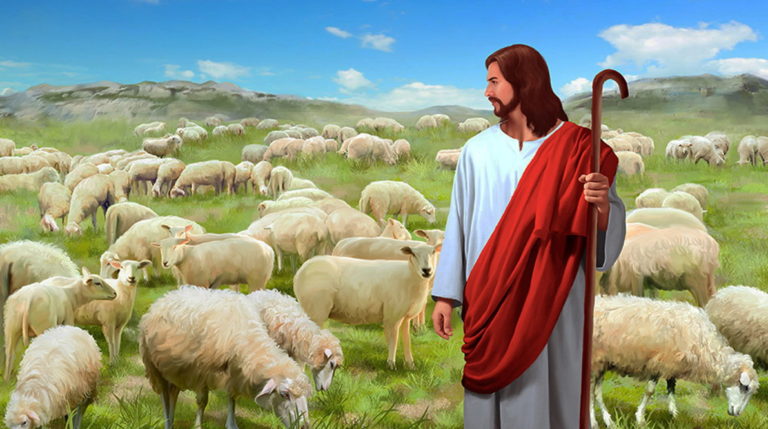
We Like Sheep: amidst the name calling -- sheep and sheeple, doesn't Christ ask us to be like sheep? And how can we be good sheep instead of following blindly?


The Drake Equation: If there are other civilizations in the universe, why have we not seen them? Could it be that most of them destroy themselves before they can be seen? And can we survive?

Changer Book: Gödel, Escher, Bach: This book on strange loops, brain maps, music, art, and Zen changed my life for good.


My Fifteen Minutes of Fame: A true story of how I beat the odds and experienced a real 15 minutes of fame.


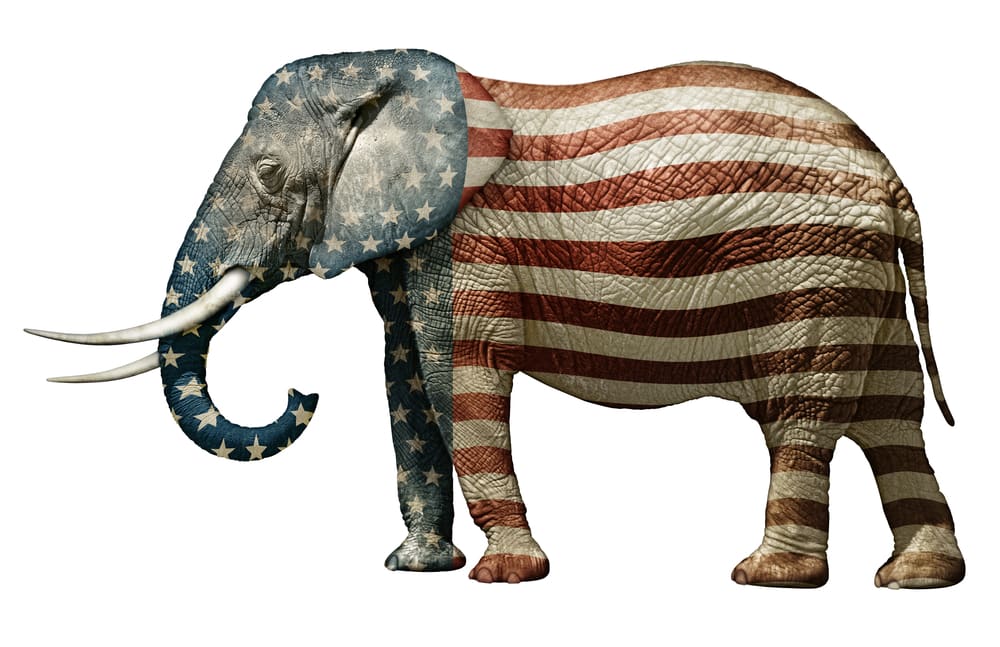
Can the Republican Party Survive?: The Party appears to be showing signs of dying. Can they turn things around and remain a force? (Written in early February 2021, but still pertinent today.)

Now that 2022 is here -- it's onward and forward. This year I'm going to be working on wiser decision making. I can take the momentum that I built in 2021, focus it with better prioritization and execution to make more of a dent -- become more of an influence, and get that much closer to changing the world.

How did you do in 2021, and what do you see going forward?

Monday, December 6, 2021

Water Witch: "The Deepening" Part 2


Book 2 of Kelly Brewer's Deepening Series gives us Water Witch. And again, in full disclosure, I was asked to provide a review.

Just like in the first book, Kyle Supplantis continues his adventures fighting space aliens with rock music. And the aliens are not happy. Now that they know Kyle is the Water Witch, they try everything to stop Kyle before he destroys them. But -- destroy them, how? Kyle still doesn't know how to use his newfound powers.

As most middle books of trilogies go, this book spends a lot more time pushing plot than world-building. And in this case, I may like the first book a little better. Now that the band has been separated this way and that, there's also a lot less music, at least at first.

Kelly Brewer gives us a lot more view into the alien side, now that we know they exist, and not all aliens are bad. But that doesn't stop the aliens from using their melting space zombies. Starting with Neptune, moving to Uranus, and then Saturn, and so on, the aliens push their way forward to Earth.

Brewer's quirky writing also continues strongly -- kind of a broken English, because -- that's well -- how these people talk. I like it, though it comes across as funny and different to me. I think it's intentional -- an attempt of quirky humor mixed with some action and horror elements.

At one place near the beginning, there was even a zombie-nado. Yeah -- I was on the floor laughing up a storm. Is there anything tornadoes can't do? But then again, later zombie scenes seem quite dire, and I have to keep reminding myself that it's just a book, and we're not really losing a war against the aliens.

The ending seemed to come quite sudden to me -- almost like stopping everything as something big happens, but then again, surprises are always like that. It was a nice twist. Of course -- like the usual middle book, it leaves us hanging. I suppose I'll have to pick up the final book as well.

So, give it a try. If you're looking for something completely different -- kind of funny, but also somewhat satisfying, check out these books. You can start with "First Contact" and continue with this book.

Wednesday, November 3, 2021

X-Files 2018


After a mostly disappointing tenth season in 2016, Chris Carter came back and redeemed himself. Instead of just six episodes, he delivered ten. And this time he provided a good mixture of standalone material and episodes that pushed forward the overarching plot -- even helping to bring things to a nice end in the finale.

2018 gave us more memorable episodes: the return of Langly, a hilarious exploration of the Mandela Effect, and one of my favorites of the season where automated machines went after Mulder and Scully.

Carter also (mostly) successfully removed my complaints from season 10 -- totally undoing that rushed and terrible ending (it turned out to be only a vision of one possible future -- Cockadoodie!!), and bringing us back to more believable plots.

And, the end of season 11 was somewhat satisfactory. It serves as both a series end and a possibility for a continuation -- just enough to have us wonder what comes next, but not too much -- so we can have a better sense of closure.

Will there be more episodes? As of now, it appears the answer is no. Carter would prefer not to do it without Gillian Anderson, the franchise is now owned by Disney, and some other forces appear to be killing the chances of a season 12. I'm not too disappointed, but would definitely watch if it came back. There's certainly plenty of juicy stuffs to pull from in the last couple of years!

Anyway, I enjoyed 2018, and until I hear otherwise, it feels like a great conclusion.

Chris Carter, thanks for all the memories!

Thursday, October 28, 2021

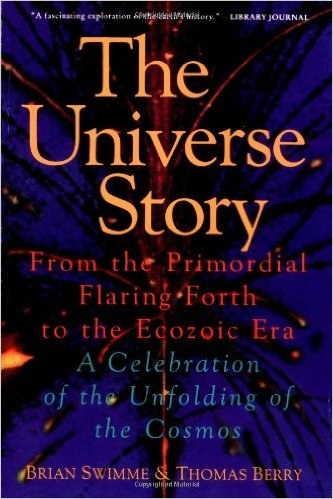
The Universe Story


Today, I'd like to review a book suggested by a friend: The Universe Story by Brian Swimme and Thomas Berry.

I'll be honest -- at first I was intimidated by the lengthy subtitles: "From the Primordial Flaring Forth to the Ecozoic Era" and "A Celebration of the Unfolding of the Cosmos." And I'm thinking: say what? But never fear, the book explains itself.

But be aware, these two authors pull no punches with their long and fancy words. I knew I was in trouble when in the first few pages, there were words I didn't even know existed -- but still I was able to piece together what they meant by their roots (etymology). In some cases, I was impressed at how they were able to find a word that fit better than any possible alternatives. In other cases, I thought: there's an easier word for that. Overall, it took me a while to get used to the style, but then I was able to press forward.

In thirteen chapters, this book follows the history of the universe -- starting with the Big Bang (poetically called the Flaring Forth), the creation of the first particles, then dust clouds, then stars, galaxies, and finally our solar system. Then it explores the beginning of life on our planet -- how the first cell was likely to form -- then the first multi-cellular organism -- then oxygen breathing organisms -- then reproductive entities -- plants -- animals -- and finally humans. The story continues, focusing on the human history on Earth, and continuing on to today.

The last chapter alerts us to the fact that we are at a crossroads -- how we are now leaving the Cenozoic Era, and entering into two possible futures. The Ecozoic Era is where humans learn to work with the Earth and continue on in a thriving symbiosis. Or we could end up in the Techozoic Era, where we forsake our connection with the Earth and end up using up all its resources. Our future is entirely up to us.

Thomas Berry provides all the historian aspects of the book, as well as the idea of the Ecozoic and Techozoic Eras. He's also a religious historian -- which I found interesting -- this book on science was not willing to forsake religion, but rather embrace some of our more humanitarian aspects. He seems to believe that everything in the universe exists in a sort of community -- where everything is connected to everything else.

Brian Swimme provides more of the cosmology in the book -- how hydrogen came together to create everything else. Like Carl Sagan -- he's quick to remind us that we're all made out of starstuff.

While I appreciated the book as a whole, and found some parts to be intriguing, some parts -- in particular the human history section (about three chapters) were highly monotonous. Often, those sections jumped around in time -- back and forth -- following some kind of stream of consciousness, often relying on our already having known these historical facts instead of explaining them to us.

Also, there were several points throughout the book where the writer would go on for about five pages saying the same thing over and over with only immaterial variance. I usually ended up scanning those pages. With a little more editing, this could have been an excellent book.

But on the other hand, this book has provided me with new ways to look at the universe, and I almost feel like I can look at Everything and have a tiny bit more of an understanding of it All.

It also ends with a striking warning: which path do we want to tread? Will we continue the cell-phone, virtual world, ignoring the planet, etc., creating a false environment in a non-sustainable fashion (the Techozoic Era)? Or can we allow ourselves to become more "human," live more in reality, become more connected to the Earth, and continue to thrive?

It certainly has me thinking.

Saturday, October 23, 2021

Dune: The Best Adaptation Yet?


Now we have another adaptation of Frank Herbert's Dune, but is it good? Is it worth it?

I went in with high hopes after having seen other movies by the director, Villeneuve: Arrival, and Blade Runner 2049. And I was not disappointed. He delivered everywhere I had expected: excellent cinematography, intriguing execution, good acting.

The music was great, and not too overwhelming -- that is, it was Hans Zimmer without Christopher Nolan. The action was also perfect.

As far as being true to the original novel, I can't think of any other adaptation that gets even close. Think of the David Lynch version, remove the scenes that weren't in the book, and add in more scenes that were passed over, and you get this movie. Some parts still get left out, just because there's so much in the books. For example, Piter de Vries makes an appearance and does a few things, but I don't remember anyone ever saying his name. 

The only complaint I have is that there was one boring part near the end. Perhaps it can't be helped, as there's a big boring section in the middle of the novel -- corresponding with this boring section. But then again, the two other Villeneuve movies I mentioned above seem to have boring sections as well. Perhaps pacing isn't his forte, but all scenes seem to be necessary.

For those who know nothing about the plot: The Atreides family is chosen to be the new stewards of the planet Arrakis (also known as Dune), and to be in charge of the spice production for the galaxy. The spice, melange, exists only on Dune, and without it, safe intergalactic travel is impossible. So, as you can imagine, this spice is very important.

The previous stewards, the Harkonnens, known for their brutality, concoct a plan to regain their stewardship and maintain their control of the spice.

Paul, the son of the Duke of Atreides, must remain strong on this new planet as he faces new challenges, which include prophecies from the Fremen (the indigenous inhabitants of Dune) and the Bene Gesserit (women throughout the galaxy with extra powers, who are trying to create a prophesied Messiah through genetic coupling). Yeah -- Paul lives in a very strange world full of interesting people.

The result is a very complex story.

I highly recommend catching this movie in IMAX -- its intended format. And I can't tell you how grateful I am that they're not pushing the 3D glasses version in the US. As I understand, it was not filmed in 3D, and I have yet to see a fully successful Fake 3D adaptation of anything -- there are always distracting artifacts. If I have to wear glasses over my glasses, the quality of the 3D has to make it worth the discomfort. So, thank you -- US -- for not ruining my IMAX experience.

Finally, this morning I've read a few reviews by "experts" and some of them made me cringe. They were basically whining about how this movie wasn't Lynch's version. So, let me set things straight. This movie is not Lynch's movie. I also loved that 1984 movie, but let's be honest -- Lynch's movie is for those who already know what's going on. Its minutes-long prologue is just terrible and beyond confusing. The extra scenes that were added to explain things just make it worse. My wife, who has not read the books, felt very confused after watching the Lynch movie, but after last night, she felt that this new movie cleared up a lot of questions. In other words, this new movie is likely to reach more generic audiences.

It you want a fun drug-trip filled adaptation of over-the-top confusing epic scenes, then catch Lynch's version. (A lot of those scenes are indeed fun to watch.) If you instead want to watch a movie that sticks much closer to the original material, does a better job of explaining what's going on, provides more of a realistic adaptation, and has Jason Momoa who's really awesome, then this Villeneuve adaptation is the one to catch.

So -- I say -- ignore those negative reviews and give this one a try. Fun for the whole family!

Wednesday, October 13, 2021

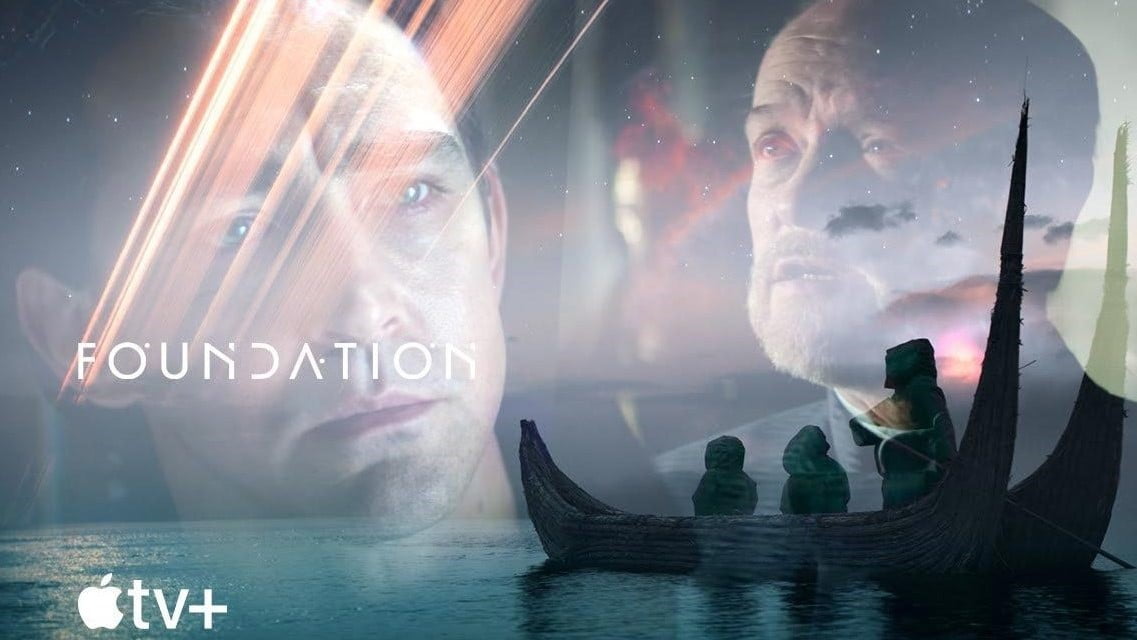
Foundation: Asimov's Epic on Apple TV+


Isaac Asimov's Foundation series were among the first books I read as a teenager. As each new book came out, I would read and learn what happened next -- how that universe merged together with the Empire and Robots series. And TV/movie producers have stayed away from this epic for decades, until now. Apple TV+ presents the very first attempt.

The issue -- the whole series is just -- smart. The main concept is that super-genius Hari Seldon has created psychohistory -- a system of mathematics mixed with human behavior to predict the future based on patterns from the past. Hari predicts that the Galactic Empire will fall within a century, and that the galaxy would remain in darkness for 30,000 years. However, if the Empire embraces Hari's plan, it would bring the number down to 1,000 years.

Eventually, the Empire agrees begrudgingly. They exile Hari Seldon to Terminus, a resource-poor planet on the edge of the universe, and tell him to have at it. The catch -- Hari had predicted the Empire would do exactly this, and it turns out that Terminus really is the best place to build a Foundation -- a way to maintain knowledge, so that when the 1,000 years of darkness are over, the new Galactic Empire can rise up again without having to start from scratch.

What comes next is like a series of short stories from certain periods along the 1,000 years. So -- yeah -- kind of hard to capture this in a TV show -- lots of politics -- lots of smart witty discussions -- lots of smart twists -- and a very large and rich world. So, how do you capture all of this on TV?

By the way, some trivia about myself -- it was ultimately these books that inspired me to become an actuary in real life. Using patterns from the past to predict the future? Count me in! Of course, the math comes nowhere near psychohistory, but we're trying. I predict that most actuaries would love this show.

When I watched the first episode of this series, I was a little concerned. On the most part, that episode accurately captures the first vignette in the book. Hari Seldon picks up Gaal Dornick, a rising mathematical genius, and tells her: "My math predicts that we will be arrested tomorrow." We also get to see Hari's adoptive son, Raych. Ultimately, Gaal joins the expedition that later becomes the Foundation.

The first thing that concerned me was that the producers decided to make the Emperor clones of Cleon I (from the Foundation prequels). The original book trilogy doesn't really dive into who the emperors are and what their personalities are -- they're more like pieces on a chessboard -- you know they exist, but they aren't really part of the main story. Yet, the first TV episode seemed to spend an inordinate amount of time on the emperors, of which there are three. Brother Day is the "current" middle-aged emperor. Brother Dawn is the "in-training" adolescent emperor. And Brother Dusk is the "former" end-of-life emperor.

In other words: this stuff wasn't in the book, so why bring it in? And the answer -- it actually works! Using this tactic has several advantages. For one -- they can go 50 years into the future and still use the same actors, providing a sense of continuity throughout the show. Kind of convenient? But wait -- it also brings in the new idea that one man has decided to inflict the entire galaxy to HIMSELF for 400 years. Can you imagine the ego? And yet, each emperor is slightly different. I'm now 4 episodes in -- and I have to be honest -- I'm seriously enjoying this new addition. Watching these emperors react to different situations has actually been thought-provoking, and I believe it adds another level of richness to the story. We already know that the Empire is going to ultimately fail, so we're all waiting to see who will be the last, and how they go down. Or will they somehow continue the cloning over the next entire 1,000 years?

I was also concerned with a couple of snafus, such as an underground city counting levels from the bottom up instead of from the top down as in most sci-fi stories; the convenient artificial gravity; talking about making a trip thousands of light years away in a non-jump ship in less than a decade. But you know what? It doesn't really matter in the end. I'm already used to those distractions and can turn that part off. If I can enjoy Star Trek, I'm not going to let this ruin my Foundation watching. I'm at least excited that they used black holes to drive the jump ships! That was just cool.

Another concern was adding a convenient action scene in the first episode -- I suppose something exciting to get people to continue watching. To me it seemed to be too much of a coincidence (no way for Hari to predict it), but the writers used it effectively in the expanding plot. So -- I'll let them have it. Ultimately, it's the price that must be paid to help make the transition to the TV screen possible. It requires a lot of expansion of the original story -- but you know what -- keep going.

Overall, the original plot is preserved incredibly well (Episode 5 proves to be exciting). I may know what happens next, but I don't know how any of the subplots will develop.

My wife, who doesn't normally watch sci-fi (except for the fact that she's married to me), is happily captured by this presentation. She says that it catches her attention much more than the sporadic Star Trek: Discovery we recently watched. She appreciates that it's being written by just one writer -- which means much more consistent writing. We're both going crazy waiting for Episode 5 this week, when we might actually get past page 100.

At the rate the series is progressing -- yes -- it will take years to get through the whole story. And I'm likely to enjoy it all. The next Game of Thrones in space!

So -- check it out. It's available on Apple TV+, but nowhere else. I think it's worth the $5 a month. Plus -- I may try out some of these other shows. We'll see ...